
Can Social Deduction and Roleplaying Coexist in a Game?
This all started in the fall of 2024, I was at a convention in Utrecht and attended a game that was marketed as a social deduction roleplying game. These two are my favorite types of games so this was a no brainer for me. It turned out that the game that I played was a game of Jubensha, a type of scripted murder mystery game originating from China. We of course had a blast but it was not quite what I had envisioned when thinking about a social deduction roleplaying game and did not scratch my itch in combining my favorite two genres. This poses the question, is it even possible?
What makes a good social deduction game?
If Werewolves is the fist edition D&D of social deduction then Blood on the Clocktower is the pathfinder, in a classic case of the student surpassing the master. The fun from both of these games is having been assigned a secret alignment and secretly plotting to murder them. Both these games work by hiding vital pieces of information (through the death of players or through misinformation respectively). Another approach is to work with chance, is someone lying or are they just really unlucky. Examples of this are Secret Hitler and my favorite of the bunch Feed the kraken in these games you have to choose between a set of cards, evil players will probably choose the red cards while good players want to choose the the blue cards. However these lines might be slightly blurred: evil players can choose to play a blue card to appear trustworthy to the others and good players might be forced to play a red one due to plain bad luck. The second approach works better in the structure of a roleplaying game, no nightphase and multiple reasons for a player failing at a task.
Conflicts with both genres
Roleplaying games have some parts that dont work too well with mechanics that are commonly found in social deduction games. The timespan of a social deduction board game is usually 30 minutes to 3 hours, while TTRPG campains might last you for years or even decades. Another issue is that it is difficult to roleplay as being part of the team while persuing your own secret agenda. Like previously mentioned there are ways to explain suspicious behavour but this does require very consistent and important skill checks. The main and most glaring issue is that once a traitor has been revealed the challenge is gone, does another player become the traitor? Does the game end? Both seem like unsatisfying conclusions.
Examples of social deduction in roleplaying games
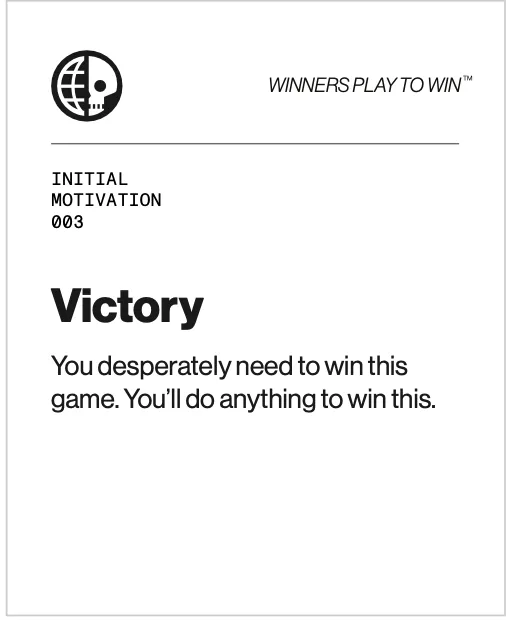
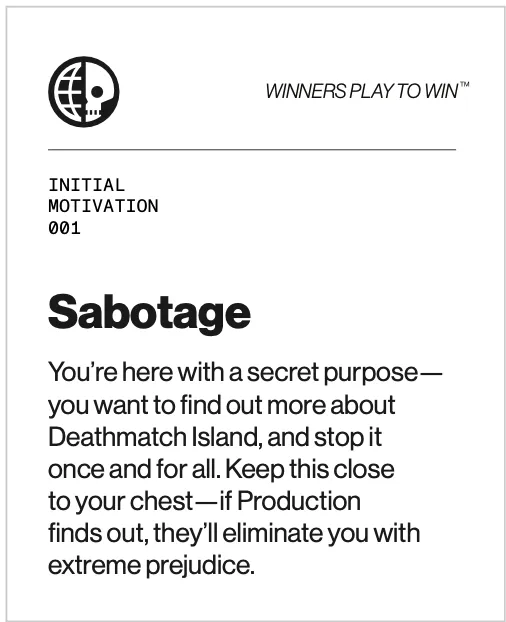
There are some examples of social deduction in roleplaying games, most of these take the form of secondary objectives rather than players having conflicing main goals. However these might still be in conflict with eachother, look at the initial motivation cards from Death Match Island. In some situations the Victory objective is in conflict with the Sabotage objective, for example in one of my recent games game threatened to disqualify the group if they went into the restricted area which lead to a fun inter party conflict.
This approach is also quite similar to how the boardgame Nemesis plays, you wake up on an abandoned space ship infested with aliens. Your job: Kill the aliens and make sure the ship is safe, however when you find youself overwhelmed by this futile task. You can always try to follow your own agenda and turn on your fellow crewmates
Solving the problems
I currently do not have a solution to this problem, I am working on a prototype for a social deduction roleplaying game called HUMANLIKE so tune in for more updates on the project.